
Understanding the euthanasia process
To say the least, you are facing a very difficult time. For most American families, pets are an integral part of the family. The idea of seeing them go is very painful and the moments spent discussing the subject and options appear through a blur of tears. The purpose of this article is to lay out the different choices that you have so that you can go over them in your own time, at your own pace.
You have important decisions to make. It is important that you take the time to consider all your options. Doing so will likely avoid future feelings of guilt and regret and you can be at peace with your choices. A rushed decision or a decision made with partial information due to heavy grief occluding your conversation with your veterinarian is often a decision regretted.
The In-Hospital Euthanasia
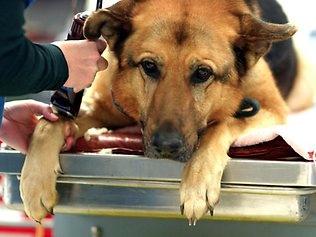
If you choose the avenue of taking your pet to the hospital for euthanasia, first, you may want to ask the hospital staff for an appointment time when it is likely to be more quiet, perhaps at the very beginning of the day or at the very end of the day. Some veterinary hospitals have trained their staff to schedule euthanasias during a quiet time. However, given the unpredictable nature of illness, it is not always possible to predict a hospital’s “quiet” time.
It is likely that your veterinarian will require a consultation to ascertain that it is time for euthanasia and that other avenues have been exhausted.
After the consultation, you will be asked whether or not you want to stay with your pet for the euthanasia. This is an important point to consider. Some people are emotionally not capable to witness the euthanasia itself.
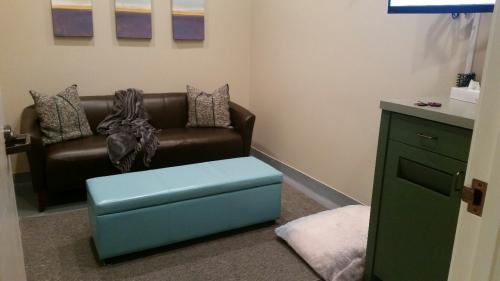
Your veterinarian may or may not sedate your pet. This is an option that should be discussed so that you know the pros and cons of sedation prior to the euthanasia. If sedation is opted for, and if you have decided that you do not want to stay for the euthanasia itself, you still have the choice of staying with your pet after the sedation has been administered and until your pet is comfortably resting or sleeping. This may take as little as a few minutes and up to 15-20 minutes depending on the drug used and the condition of your pet’s internal organs.
Then, your veterinarian will take your pet to the treatment room and will insert an IV catheter into your pet’s leg to ensure that the final injection is properly administered. Some veterinarians will place the IV in the consultation room with you present, at your request. In some facilities, this may not be possible due to technical reasons (lighting, personal preference, etc...) Some veterinarians prefer to use a direct needle for the injection of the euthanasia solution which does not require the placement of an IV catheter.
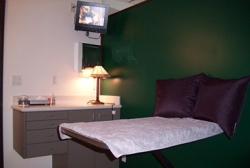
The final injection takes only seconds to take into effect and after it has been given, the doctor will listen to your pet’s heart to make sure that he has passed away.
You will likely be given the option to spend a few moments with your pet before leaving. It is wise to request that all paperwork and payments be done ahead of time so that you can leave when you want after the procedure and you do not have to wait at reception and take care of paperwork and payment details at a moment when you will likely experiencing heavy grief.
The In-Home Euthanasia
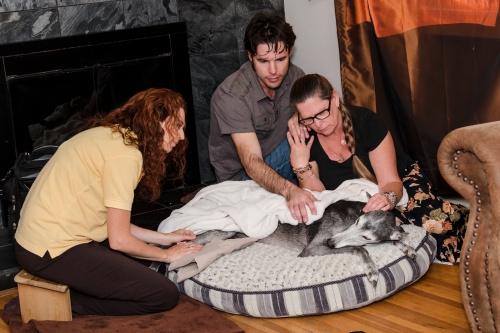
The main reason for choosing an in-home euthanasia is that it will be more comfortable for your pet, less stressful and that he or she will have a dignified departure in the comfort of your own home. You and your family will also be able to grieve in the privacy of your own home.
This terribly difficult and emotionally painful moment can be made a more comfortable, more peaceful experience for your pet, you and your family. Some people even report that having the euthanasia done in-home made such a difference that they didn’t have to forget their pet’s last day and that it made this most difficult decision and experience of pet euthanasia one that they can remember as a special moment and a good memory, rather than one that would diminish the memory of their family pet.
Most pets don’t like to go to a veterinarian’s office. They are scared, anxious. Some of them don’t like to go in the car. For some, especially arthritic or cancer patients, it will not only be unpleasant to be lifted in and out of the car, but also painful and possibly degrading. You now have the option to say goodbye to your pet at home in his or her own surroundings and avoid having your pet spend the last moments of his or her life in a place that is dreaded and where unpleasant moments have been experienced.
The procedure for the euthanasia is similar to what is described above in the section discussing the in-hospital procedure. Sedation may or may not be opted for depending on pet’s comfort level and circumstances; the IV will then be placed; you will be given as much time as you wish prior to the final injection and you will be given as much time as you wish to say your goodbyes after the euthanasia and before your pet’s body is transported into the doctor’s vehicle for the aftercare.
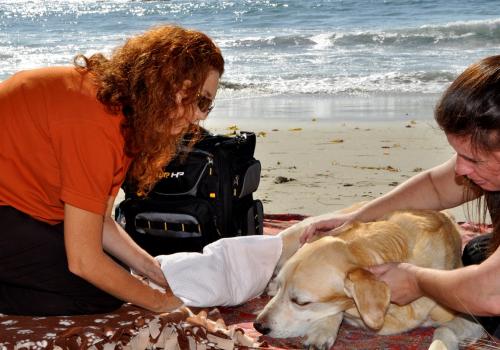
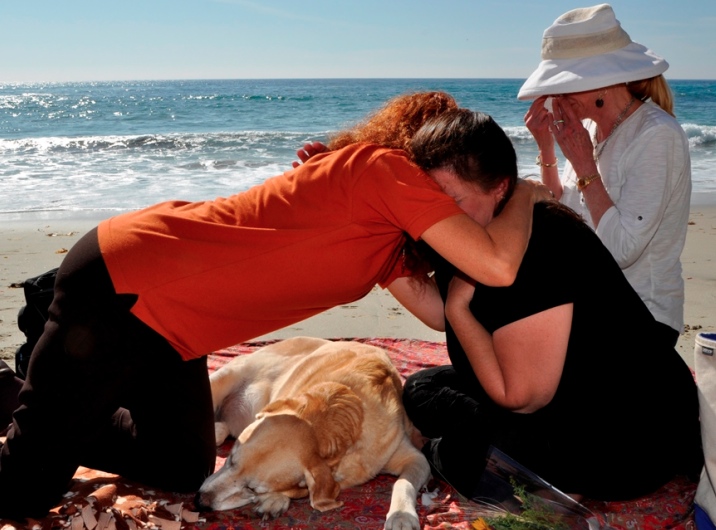
The difference is that it will be done in familiar surroundings. The location of the euthanasia can be selected by you, your pet and your family. It can be done under a favorite tree, in the backyard, on a favorite couch or bed... virtually anywhere within reason, even at the dog park or at the beach. The important thing is for your pet to be comfortable and for you to be able to hold him or her the entire time if you wish.
Opting for an in-home euthanasia does not mean that you are obligated to witness the entire procedure or any of it. You and your family may be present for all of the procedure, part of it or none. It is your choice. Regardless of whether or not you decide to be present is to know that your pet will be comfortable and happy.
After you have made the appointment, our staff will send you a confirmation email. It will contain some very important information for you to review so that you are fully prepared and know what to expect. This email will also contain a link to allow you to fill out the required forms. The forms are user friendly and can take as little as 10 minutes to fill out. If you are unable to fill out the forms, you will have to fill them out upon the doctor's arrival. The doctor always take a set of paper forms if the need arises and if you chose not to fill out the electronic forms. Please be advised that there is an additional fee if the forms are not filled out electronically.
After the doctor has gone over the forms with you to ensure you the options you marked on the forms are exactly what you wanted and once the payment is taken care of, the doctor will sit with you and answer all your questions, go over the procedure and discuss and choose the right approach for your pet.
After this, we will proceed with the procedure.
Once the first injection has been done (if sedation is warranted) and your pet is comfortable, the doctor will insert an IV catheter in your pet's leg so that a secure access to a vein is granted. An IV catheter is not a big IV hook up with a line and bag: it is simply a tiny plastic tube (no bigger than a needle) that gets secured in place on your pet's leg. It is only as uncomfortable as the prick of a needle can be. If no sedation is necessary for your pet, the IV catheter will be inserted with your pet lying down comfortably. Depending on your pet's disposition and the level of pain his condition is causing him, sedation may or may not be necessary (see "Use of sedation"). Very rarely, a muzzle may be necessary so that he or she will allow the doctor to give him or her the first injection.
The reason for the IV catheter is that it is important that the final injection goes intravenously and that the needle doesn't slip on the side of the vein because the product can burn if the needle slips. With the IV catheter correctly in place, it is impossible for this to occur and your pet will not have to be held still at the time of the injection. It makes it more peaceful and it makes it possible for you to hold your pet at the final moment.
It takes only a few seconds for the euthanasia solution to take effect. This solution is basically an overdose of anesthetics and causes first complete unconsciousness and then the breathing and heart to stop. It is as painless as being put under anesthesia. Within a few seconds, your pet will be unconscious. It may take a minute or two for the heart to stop. The doctor will listen carefully to your pet's heart to ensure it has stopped before pronouncing him or her gone. After that, there is no danger of your pet waking up. This is a very common fear for pet owners. What if he wakes up a long time after? Have no worries, with the current products used today and the careful auscultation by the veterinarian after the injection, this cannot happen.
Whether in the home or in the hospital, there are circumstances which make it impossible to place an IV such as when the pet is very dehydrated or when the blood pressure has gone too low (this can sometimes happen with the sedation), or when the medical condition of the pet produce oedema ("water" accumulation) in the legs such as when the pet has not been able to get up for long periods of time or when cancer or a heart condition have impeded blood circulation. In such cases, it may be that an alternate method of euthanasia will be opted for, such as going "internally". There are several alternate methods of euthanasia, but regardless of the method opted for in these cases, the doctor will make sure that your pet is completely sedated and will not feel the injection. When an alternate method of euthanasia is opted for due to the placement of the IV being too difficult or impossible, the doctor will explain the circumstances to you and will explain what will be done. When an alternate method is opted for, it is important for you and your family to be aware of the fact that "agonal breathing" is a more common occurrence than when the euthanasia is done via an IV. Please see our page on Understanding death for an explanation of what this phenomenon is and for the description so that you are not worried that your pet is suffering during this process.
Occasionally, some muscle twitches might occur after the death of a pet. In the rare instance that this may occur, be assured that your pet is gone by that time. Pet owners are sometimes startled and upset at the sight of those post-mortem nerve twitches, but please be assured that it is not abnormal and that the pet is actually gone when that occurs. It does not always occur but if it does, I want you to be prepared. Those twitches may rarely include what seems like several deep sudden breaths" but those are, again, only a post-mortem (after death) reaction. Another thing to be aware of is that your pet's eyes will likely not close after he has passed away. For a full description of the possible manifestations of death, see "Understanding Death".